You check your water purifier every day, and you trust the water you consume. But one random day, someone says, ” Check the TDS or PPM of your water. Suddenly, you are sitting there wondering what PPM even is, why people keep talking about TDS, and whether your drinking water is actually safe, clean, or healthy.
But the truth is, most people have no idea what the number on a TDS meter actually means. Some think lower PPM means healthier water, and some believe RO water fixes everything. And honestly, brands don’t make it any less confusing.
Here’s the actual reality: water is supposed to be completely empty, and your body still needs minerals. But if the PPM gets too high, your water can start tasting weird, damage appliances, leave white stains everywhere, and slowly become unhealthy for daily use.
And the crazy part? In cities like Bangalore, your water quality can change from one area to another within a few kilometres. That’s exactly why understanding PPM matters more than most people realise.
In this blog, you’ll finally understand what PPM in water actually means, what TDS levels are considered safe, how to check them at home, and why blindly chasing “pure water” is not always the smartest thing to do.
PPM Full Form in Water
The full form of PPM in water is Parts Per Million. It might sound technical, but the meaning is very simple. PPM is used to measure how many dissolved particles are present in water. These particles can be minerals like calcium and magnesium, salts, metals, impurities, and chemicals.
For example, If you put a drop of ink into a huge tank of water, PPM tells you how concentrated that ink becomes inside the water. So when someone says that water comprises 150 PPM, it means there are 150 parts of dissolved substances for every million parts of water.
Why Does PPM Matter?
PPM in water indicates the concentration of dissolved solids that are present in drinking water, and it is closely connected to TDS, which means Total Dissolved Solids. So, if the PPM is higher in your water, then more dissolved substances are present in the water. On the other hand, the lower the PPM, the purer the water may seem.
PPM in water tells you the concentration of dissolved solids present in drinking water. It is closely connected to TDS, which stands for Total Dissolved Solids. But most people get confused here. Lower PPM does not always mean healthier water. Water with extremely low PPM may lose essential minerals your body needs. And on the other hand, very high PPM can make water taste bitter, salty, or unsafe over time. And that’s why balance matters.
Understanding the TDS of Drinking Water in PPM
The most googled term is “TDS or TDS of drinking water in PPM”.
TDS is usually measured using a PPM unit, which means different ranges indicate different water quality levels. Here’s the TDS breakdown:
| TDS | Level Quality of Water |
| 0-200 | Good |
| 201-500 | Fair |
| >500 | Bad |
How Many PPM in Water Is Safe?
How many PPM in water is safe? Yet, another of the most Googled questions at some point.
The answer is simpler than people make it sound. Safe drinking water is not about chasing the lowest TDS possible. Safe drinking water is not about chasing the lowest TDS possible. It is all about maintaining the right balance of dissolved minerals and impurities.
So, if your TDS of drinking water in ppm falls under 0-200, your water is usually considered good for daily consumption. Once the TDS starts crossing 500 ppm, the water may comprise excessive dissolved salts, hardness, or impurities that can affect:
- Odour
- Taste
- Drinking water quality
- Appliance Life
But here’s the important part people miss:
Very low TDS water is not automatically “better.” Your body still needs essential minerals in water. That’s why balanced purification matters more than over-purification. This is exactly why smart purification systems like DrinkPrime focus on adapting purification to your area’s actual water quality rather than treating every water source the same way.
Signs Your Water PPM May Be Too High
You don’t always need a meter to suspect high PPM. The common signs are:
- White stains on utensils
- Bitter or salty taste
- Dry skin after washing
- Hard water scaling
- Weird smell in water.
Can You Check PPM at Home?
Yes, and it is very easy. You can use a small digital TDS meter to measure the PPM of your water at home.
- Turn on the meter
- Dip it into water
- Wait a few seconds
- And read the PPM number
Most people now regularly check their water purifier output because water quality changes depending on:
- Area
- Borewell water
- Pipe conditions
- Municipal supply
- Season
Especially in cities like Bangalore, where water sources vary greatly, checking PPM can make a huge difference.
Why the Advanced Water Purifier Matters
Here is something most brands won’t openly explain. A water purifier should not just remove dirt, but it should also maintain a healthy mineral balance. Some traditional RO water systems reduce TDS too aggressively, leaving water with extremely low PPM, which may sound pure, but it can affect taste and mineral balance. This is where smart water purification systems are becoming more relevant.
Why Choose DrinkPrime?
Instead of giving the same water purification setup to everyone, DrinkPrime makes use of smart technology to understand your area’s water quality and adjust purification accordingly. Because the water coming into your home in Bangalore can be completely different from that of someone living just a few kilometres away. DrinkPrime offers:
1. Smart Filtration Based on your water
Not all water needs the same level of purification. DrinkPrime’s technology adapts based on your water conditions, helping maintain balanced drinking water instead of over-purifying it unnecessarily.
2. Real-Time Monitoring
The water purifier continuously tracks water quality and performance, so you are not just hoping your water purifier is working properly.
3. No Heavy Upfront Cost
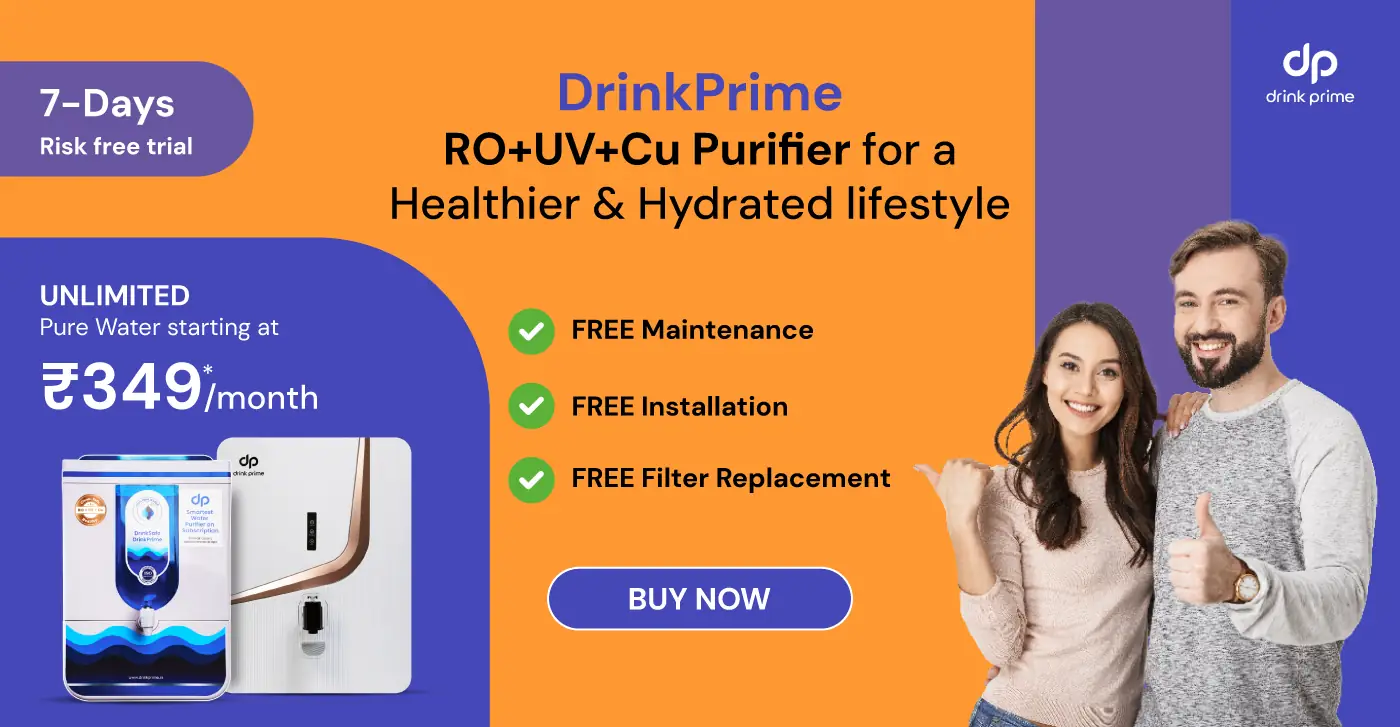
One of the major reasons most of the people delay buying a water purifier is the price. DrinkPrime offer subscription-based plan, so that you can get access to purified drinking water without paying a huge amount.
4. Free Maintenance Included
Most people only remember purifier servicing after the water starts tasting weird. With DrinkPrime, maintenance and service support are included in the plan, making things much more convenient.
Summary
In summary, PPM in water stands for Parts Per Million, which is used to measure the amount of dissolved substances like salts, minerals, metals, and impurities present in drinking water. It is closely linked to TDS, which is Total Dissolved Solids, helping people understand the overall quality of water. While many assume lower PPM always mean better water, that is not completely true. Moreover, extremely low PPM can eliminate essential minerals, while very high PPM can affect the smell, taste, and safety of water.
Generally, water with a TDS level between 0-200 ppm is considered good for daily drinking, 201-500 ppm is fair, and anything above 500 ppm is not ideal for long-term consumption. Besides, common signs of high PPM include salty taste, white stain on utensils, hard water scaling, and unusual smell in water.
Since water quality differs from one area to another, advanced water purification systems play an important role in maintaining the right mineral balance. DrinkPrime uses smart water purification technology that adapts to the quality of water in your area, making sure that you get access to safe drinking water.
FAQs:
- What is the ppm full form in water?
PPM full form in water is Parts Per Million, which helps indicate the TDS or Total Dissolved Solids level in water and gives an idea about overall water quality.
2. What is ppm in water?
PPM in water stands for “Parts Per Million.” It is used to measure the concentration of dissolved substances like minerals, salts, and impurities present in drinking water.
3. How many ppm in water is safe for drinking?
Generally, water with 0–200 ppm is considered good for drinking. Water between 201–500 ppm is considered fair, while anything above 500 ppm may not be ideal for regular consumption.
4. Can I check the PPM level of water at home?
Yes. You can easily check the PPM or TDS level of water using a digital TDS meter. It gives a quick reading of dissolved solids present in your drinking water within seconds.
Get 7 Days Risk Free Trial