Knowing what kind of purification technique your water needs is perhaps the most important step in your water purification journey.
The quality of your water depends on your city, your area and your water source. Regardless of the source of your water, it’s imperative that you either rent or own a water purifier at home.
Read this detailed guide to know and understand what is in your water and what kind of purifier it demands.
What is actually in your water?
Apart from essential minerals like calcium and magnesium, your water also contains a plethora of harmful chemicals, bacteria, heavy metals and other contaminants.
This also depends on the water source. Not every area’s water has the same level of impurities. These impurities are measured as Total Dissolved Solids (TDS). TDS is the total amount of solid particles, such as salts, minerals, and metals, dissolved in your water. It is measured in ppm.
Your water’s TDS only tells you ‘how much’ is dissolved, not ‘what’ is dissolved.
What RO does (and what it doesn’t)
In simple terms, RO stands for Reverse Osmosis. The purifiers have an RO membrane which uses high pressure to remove TDS, impurities and contaminants.
RO, however, does not remove gases like chlorine or sulphur which causes odour, for which a carbon filter is used in the purifiers.
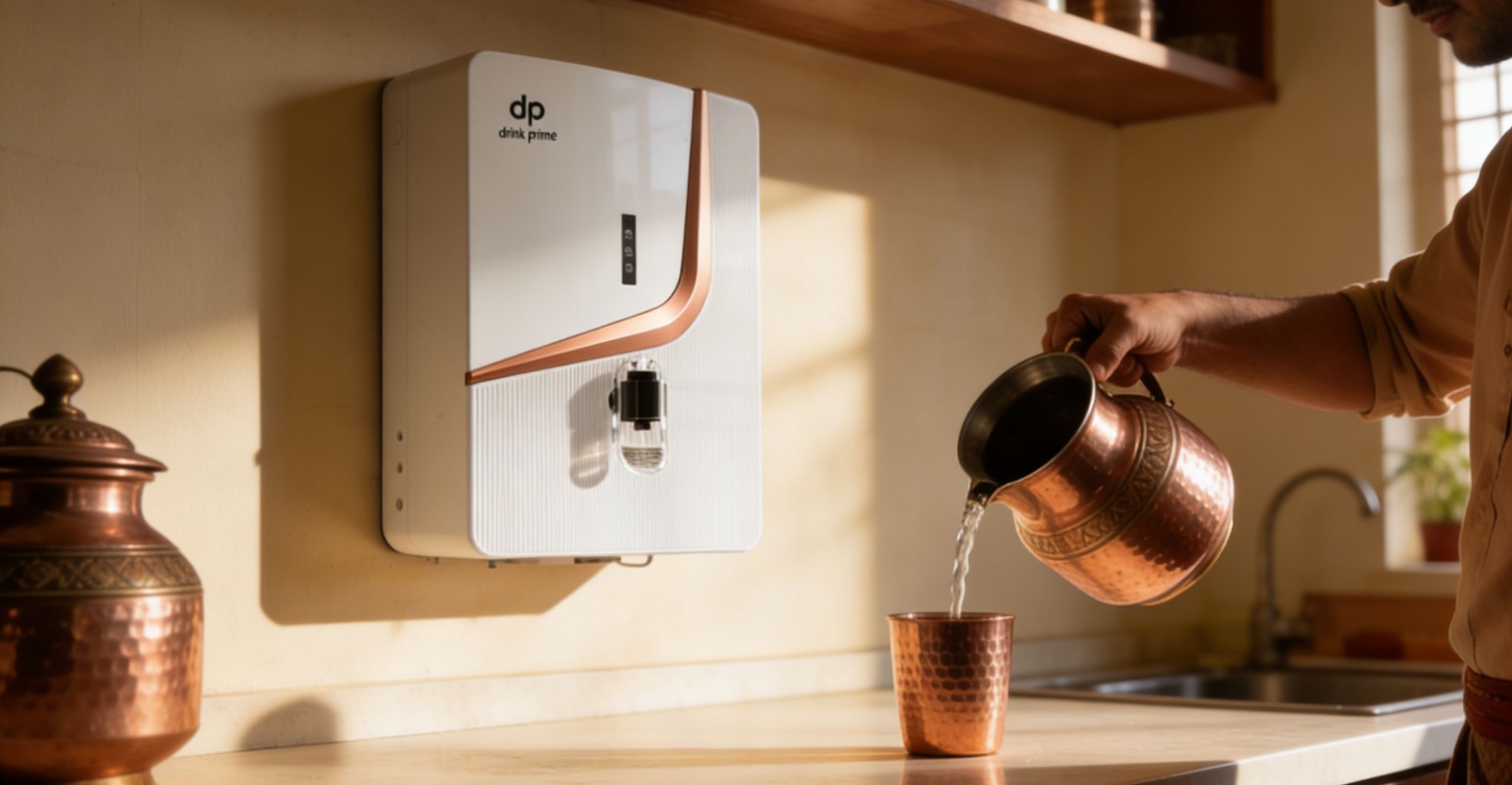
DrinkPrime’s water purifiers use RO to remove all the contaminants from drinking water. DrinkPrime’s purifiers, which you can rent, don’t let part of your tap water skip RO to adjust TDS. They ensure every drop goes through 100% RO purification before adding essential minerals like calcium and magnesium.
Since RO also removes essential minerals like calcium and magnesium, DrinkPrime’s purifiers add back these minerals to the treated water.
The TDS question: who needs RO, who may not?
Generally, RO is used for water with high TDS. For low TDS, ultraviolet (UV) may be enough. Let’s break that down.
If your water has a high TDS, it usually affects taste and smell. High TDS also causes scaling problems in pipes or water containers. If the water tastes bitter, salty or has an unpleasant odour, there is a high chance your TDS could be higher than permissible standards.
| TDS (ppm) level | What does it mean for your water? |
| 0-200 | Your water is completely safe to drink |
| 201-500 | Your water is still acceptable, but the water’s taste might be affected |
| >500 | Your water will taste salty and/or bitter and needs purification |
You can use a TDS meter to measure the level of TDS and if you don’t have one, you can monitor the taste and smell of your water. If it tastes bitter or salty, your water needs to be purified. Even if the taste is fine, a purifier is still recommended, since TDS can’t detect bacteria.
As mentioned above, RO as a purification stage is generally used when TDS is more than 500 ppm. That said, water with a lower TDS may still need RO, depending on its source. You can choose between using an RO purifier and one with just a UV lamp.
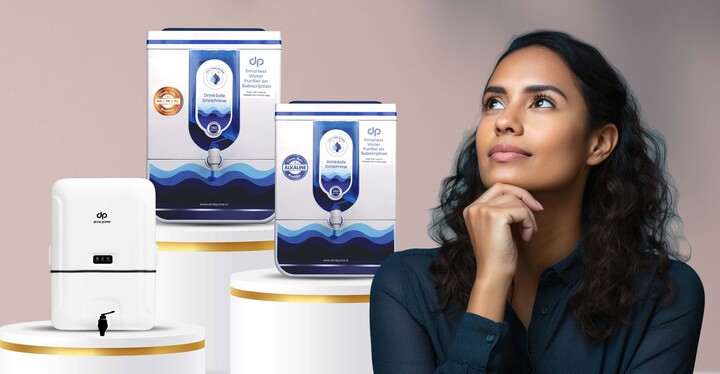
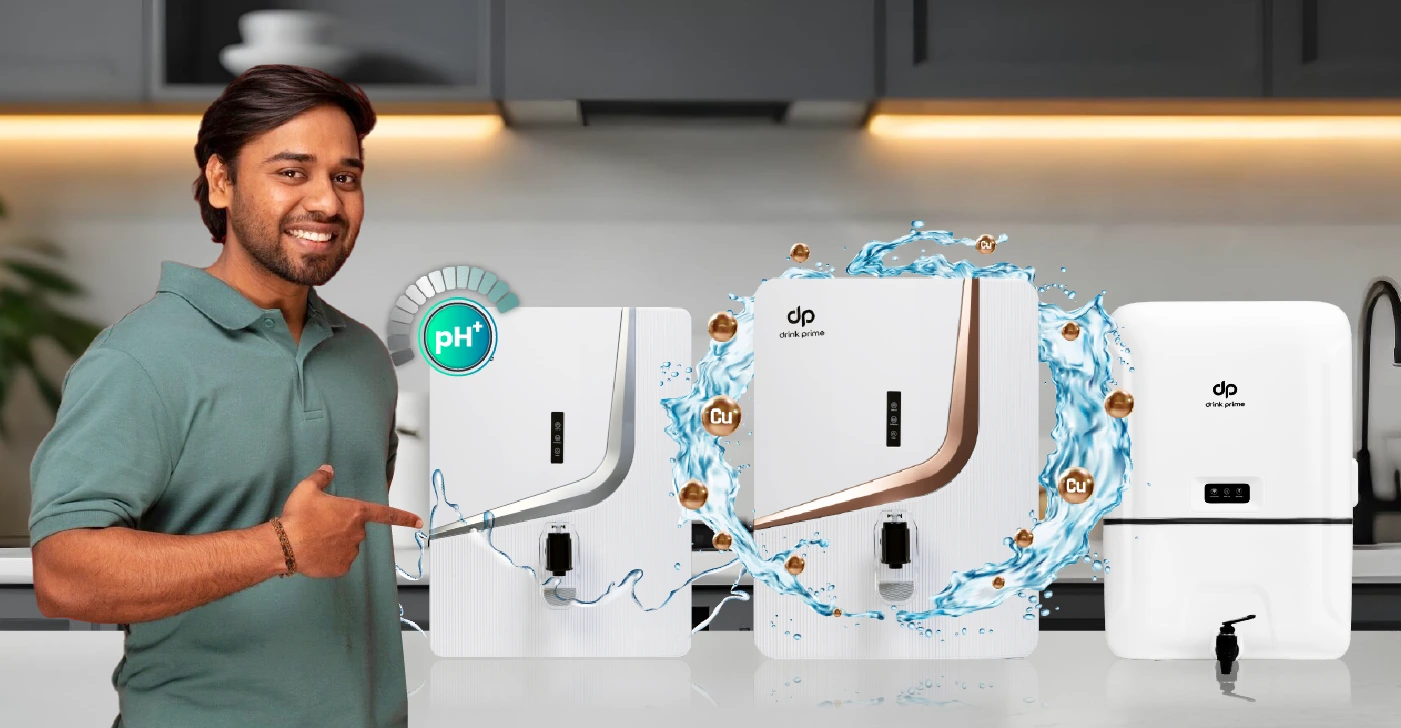
DrinkPrime offers a range of purifiers that cater to both scenarios. The Copper, Alkaline, Mineral+ and Under the Sink all combine an RO membrane with a UV lamp, while the UV model has only the UV lamp and no RO membrane. In the RO variants, the membrane removes heavy metals and the UV lamp neutralises bacteria and viruses.
DrinkPrime’s UV model has an 11-watt UV lamp, which is very effective at eliminating bacteria. It disinfects the water using ultraviolet light. A UV purifier is usually enough for low-TDS water because such water is assumed to have few contaminants for an RO membrane to remove.
Get 7 Days Risk Free Trial
Conclusion
So, RO or UV? That depends on your water source and its TDS. RO works best if the water has contaminants like heavy metals, fluorides and nitrates. If your TDS is low and your main concern is bacteria and viruses, and you live in an area where the water source is known to be clean, then a UV purifier will cater to your needs.
What’s the first thing to do?
Check your TDS level and then select a purifier according to your needs. You can also use DrinkPrime’s website to check your area’s TDS.
Frequently Asked Questions
1. What is TDS in water?
Total Dissolved Solids or TDS is the measure of impurities and contaminants present in your water. It could be heavy metals, bacteria, viruses etc. It is measured in ppm.
2. What is a good TDS level for drinking water?
Water with TDS up to 200 ppm is considered ideal. If the TDS is between 201 and 500 ppm, although considered safe, the taste may be affected. Above 500 ppm, it will taste salty or bitter and needs purification.
3. How do I know if my water needs RO or UV, and does my water source matter?
It depends on your water source and its TDS. Water quality varies by city, area and source (borewell, tanker, municipal supply), so the right purifier depends on what’s actually in your water. Start by checking your water’s TDS with a TDS meter. If the level is over 500 ppm, using a purifier with an RO membrane is recommended. If it is lower than that, and your main concern is bacteria and viruses, a UV purifier may be enough.
4. Can UV purification reduce TDS?
No. UV targets microorganisms like bacteria and viruses. It doesn’t remove dissolved salts, heavy metals or other dissolved contaminants, which is what RO does.
5. Does RO remove chlorine and bad smell?
Not on its own. RO doesn’t remove gases like chlorine, which is why purifiers use a carbon filter to take care of smell and chlorine.
6. Does RO remove essential minerals from water?
Yes, RO removes minerals like calcium and magnesium along with the impurities. DrinkPrime’s purifiers add these essential minerals back after 100% RO purification.
7. How can I check my water’s TDS?
Use a TDS meter. If you don’t have one, you can monitor your water’s taste and smell.
8. How often should I check my water’s TDS?
It’s a good idea to check whenever your water source changes, after the monsoon, or if you notice a change in taste or smell.
9. What happens if I use RO on water with low TDS?
Using RO on already low-TDS water isn’t harmful, but it may be unnecessary. RO removes dissolved minerals along with impurities, so low-TDS water can end up with even fewer essential minerals like calcium and magnesium. DrinkPrime’s purifiers add these minerals back after RO purification, so the water stays balanced. If your TDS is low and your main concern is bacteria and viruses, a UV purifier may be enough.
10. Does DrinkPrime offer free technian visits as part of the rental plan?
Yes, DrinkPrime’s subscription plan includes free installation, delivery and relocation. The app also helps you check your purifier’s health and your water consumtion. DrinkPrime also offers free technician visits whenever your purifier needs a filter change.