
You do, but not in its entirety. Most of the minerals your body needs come from the food you eat. Only a small portion of the daily minerals you consume come from your drinking water. This depends on your source water, and how much you drink.
Let’s break it down.
Even though pure water is made of just hydrogen and oxygen, the water that reaches your glass has more than just these two. Water contains certain minerals like calcium, magnesium, and sodium. These minerals are there in your water either because they are naturally found there or because they are intentionally added.

How much of your daily mineral intake actually comes from water?
Even though we have established that only a small amount of minerals come from water, we can safely say that water does supplement the intake of calcium and magnesium.
There are different types of minerals a person needs on a daily basis but not all of them come or need to come from water.
According to the World Health Organisation (WHO), calcium and magnesium intake is very important to our health to maintain bone and muscle strength, and heart health. Even though food is the main source of these two minerals, water complements the intake.
The percentage of minerals we get from drinking water is often disputed. It also depends on the amount of water you consume on a daily basis, and the concentration in which these minerals are present in the water you drink.
There are many sources of water which are mineral-rich like natural groundwater, spring water and mineral water. Groundwater and spring water, which are stored beneath the earth’s surface, are rich in minerals like calcium, magnesium and potassium. Naturally occurring mineral water does exist, but it’s more commonly found as bottled water, rather than sourced directly.
Drinking water with Total Dissolved Solids (TDS) in the range of 0-200 is recommended for drinking. A higher TDS does not necessarily mean it contains all the necessary minerals our body needs. It can also contain contaminants such as arsenic, lead and mercury which can harm the body.
Does RO purification remove these minerals?
Yes, Reverse Osmosis (RO) does remove impurities and contaminants, including the ‘good’ minerals, but again, that is also not necessarily a bad thing.
RO water purifiers consist of a semipermeable membrane, which filters out contaminants and impurities from the water. The water passes through the membrane while the dissolved salts do not.
Along with minerals, RO also removes heavy metals, arsenic, nitrates, fluorides, and other contaminants. Since one of the effective purification techniques is RO, the RO membrane would not be able to distinguish a good mineral from a bad one. RO can reduce the levels of calcium and magnesium during the purification step as they are present as dissolved ions.
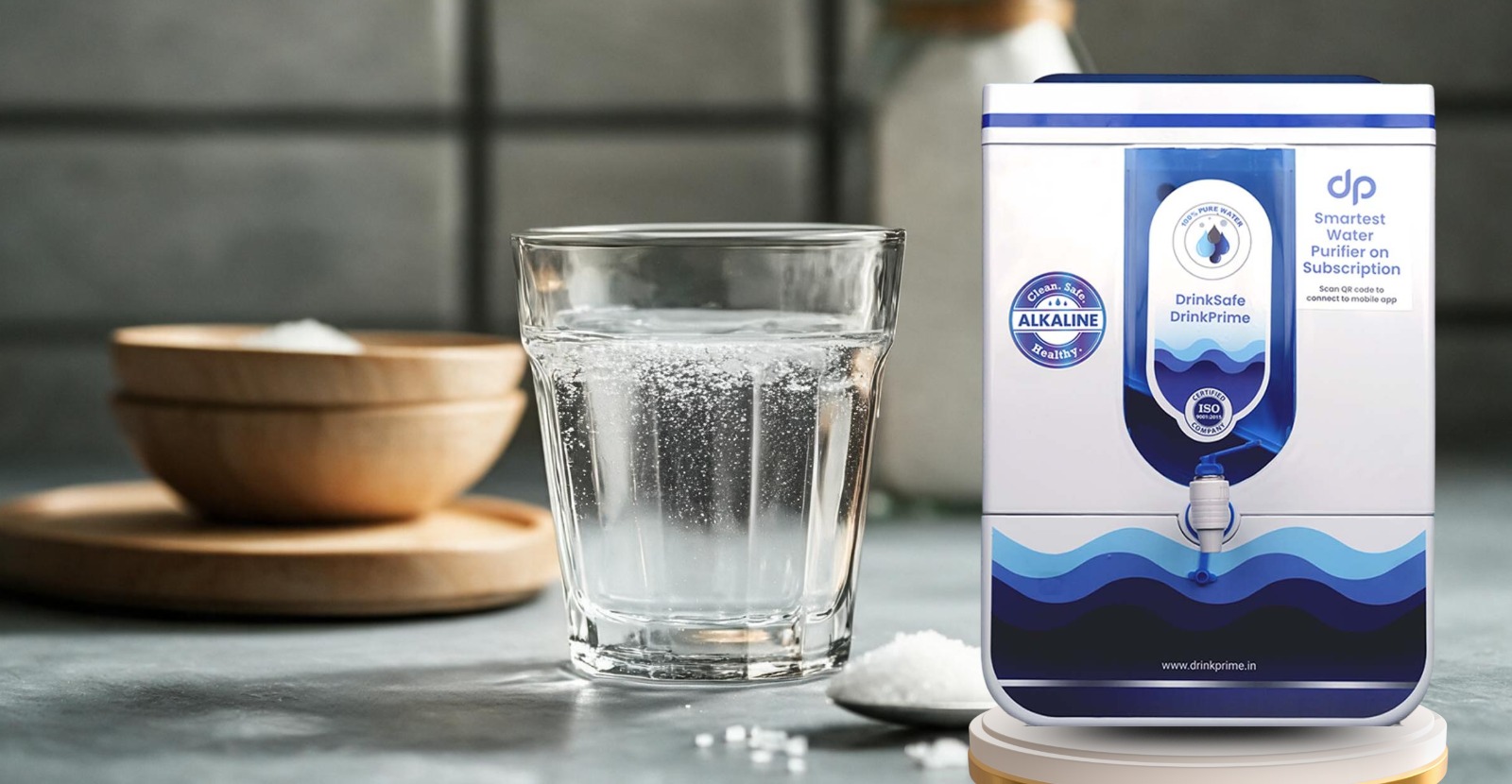
DrinkPrime’s purifiers address this concern, should you have any, very effectively. The purifiers have mineral cartridges that add minerals like calcium and magnesium back into the treated water. So, even though RO purifies your water, the cartridges add them back.
While DrinkPrime has a 100% RO purification technology, followed by UV and carbon filtration stages, there are different types of purifiers on rent including Copper, Alkaline, Mineral+, depending on what benefits you the most. All these purifiers add the essential minerals back to the treated water right after the RO purification stage.
Get 7 Days Risk Free Trial
Conclusion
So, do you actually get your daily minerals from your water? You can, but the amount varies according to where you get your water from. People who do not get their daily minerals from food depend more on the presence of minerals in drinking water. If your diet already covers your minerals, then water is a bonus, and not something you need to rely on. Some of the mineral-rich foods include millets like ragi, legumes and pulses, leafy vegetables and dairy products.
Meanwhile, calcium and magnesium are present in the natural water but the water may also contain harmful contaminants prompting purification. While RO purifies your water for you, it may also remove some concentration of minerals that water contains. Having said that, it doesn’t make RO purification unhealthy.
Remineralisation or mineral cartridges add your necessary minerals like calcium and magnesium back to your water. Check DrinkPrime for different purifiers on rent. There are Copper, Alkaline, Mineral+ which add your essential minerals back to the treated water. The smarter way to go about it is, make sure you know your source water well, and choose a purifier based on what benefits you want to derive from it. You can always depend on your drinking water as a secondary source rather than it being a primary source for mineral intake. So, eat healthy and stay hydrated.
You can choose DrinkPrime
DrinkPrime offers different types of purifiers depending on what your water needs. So, are you ready to choose among Alkaline, Copper or Mineral+ purifiers on rent?
Frequently Asked Questions
1. Does RO water cause calcium and magnesium deficiency?
No. It does not. Your mineral intake depends on your food for the most part and not on your drinking water needs. While water complements your mineral intake, it does not cause a deficiency as long as your mineral needs are taken care of by your diet.
2. What is the ideal TDS for drinking water?
The acceptable TDS limit as per Bureau of Indian Standards (BIS) is 500 mg/L, while WHO recommends a maximum TDS of 300 mg/L. The domestic water purifier industry considers TDS up to 200 mg/L as most suitable for drinking and palatable in terms of taste.
3. Is water with under 50 TDS safe to drink?
Yes, water with under 50 TDS is safe to drink.
4. Does DrinkPrime’s Copper, Alkaline and Mineral+ purifiers add minerals back to the treated water?
Yes, the purifiers add minerals like calcium and magnesium back to the water after purification.
5. Can I get all my daily calcium and magnesium from food alone?
No, your food and your drinking water complement each other for your daily mineral intake.
6. What does RO purification remove besides minerals?
RO purification removes contaminants from your water like lead, arsenic, mercury etc, and makes it safe to consume.
7. Does DrinkPrime use a TDS controller?
No, DrinkPrime does not use TDS controllers.
8. How do I check if my water is in the ideal TDS range?
Use a TDS meter to check the TDS of your output water. If you do not have a TDS meter, monitor the taste and smell of your water. If your water tastes salty, bitter, or metallic, or has an unpleasant odour, your TDS could be too high and your water needs purification.


One thought on “Do You Actually Get Your Daily Minerals From Drinking Water?”