Have you ever wondered about the stages of purification your water undergoes before you drink it from a glass?
It’s very natural to think about it. The water you drink today is riddled with contaminants, impurities, heavy metals etc. Although water naturally contains minerals like calcium and magnesium, it can also carry many harmful substances that need to be removed to make it safe, healthy and pure.
Most purifiers have multiple stages of purification like RO, UV, UF, carbon filters etc. Read this guide to understand the importance of various stages of purification.
Why Indian tap water needs more than one kind of purification
Around 50 years ago, we could probably drink water straight from the tap. A lot has changed since then and unfortunately, it’s not the case anymore.
With pollution making its way into water and the environment at large, Indian homes need purifiers that have more than one stage of purification.
The change in pollution levels is starkly visible especially in tier-1 cities like Bengaluru, Mumbai and Delhi etc., where pollution in the air and water shapes how we live, eat and drink.
Water we get from municipalities and borewells often contains more than one type of contaminant.
Water can have biological contaminants (bacteria, viruses), dissolved chemicals and salts (high TDS, hardness, fluorides and nitrates), heavy metals (arsenic, lead, mercury), chemical pollutants (chlorine, pesticides), among others.
Each kind of contaminant needs a different purification technology. UV can effectively neutralise biological contaminants but not dissolved salts. RO removes TDS but it cannot remove chemical pollutants like chlorine or sulphur.
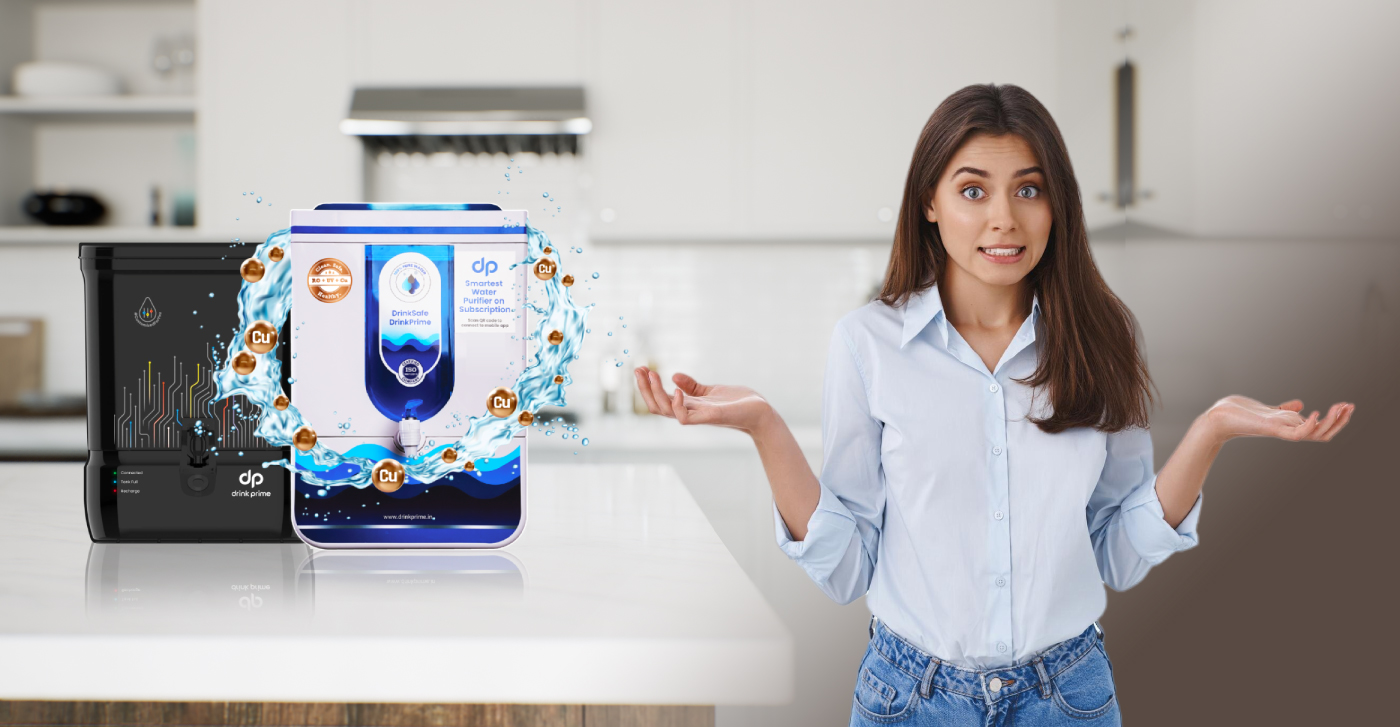
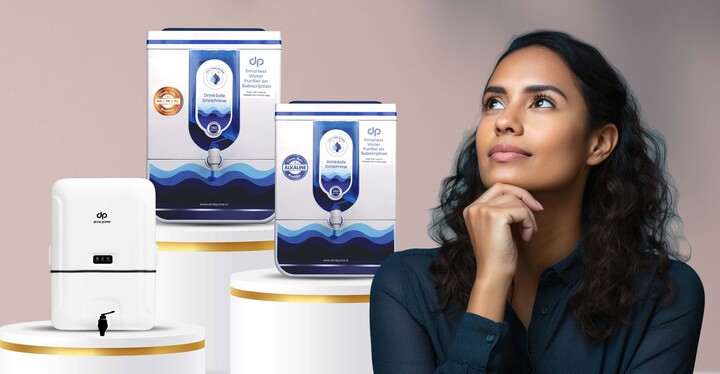
DrinkPrime’s water purifiers offer different types of purification depending on your water type. These purifiers come with different purification stages, making your water completely safe.
UV vs RO vs UF: which is better
There is no answer to this question. All these are different purification methods and choosing one in isolation usually does not guarantee fully purified water.
Many purifiers today come with all these stages one after the other. Once the reverse osmosis (RO) membrane removes TDS, heavy metals etc., water is then passed on to the next stage, which is UV. Here, an ultraviolet (UV) lamp is installed inside the tank, which neutralises bacteria and viruses.
Ultrafiltration (UF) is a membrane-based treatment (yes, similar to RO) where a UF filter blocks bacteria, viruses and other particles.
If you get water with very low TDS, which does not require RO, DrinkPrime offers purifiers with just UV options to remove biological contaminants.
What a UV purifier does (and doesn’t do)
A UV water purifier, like the one in DrinkPrime, purifies water in multiple stages. There is a dual (sediment and pre-carbon) filter, a UV lamp and a copper cartridge, along with a mineraliser and a pH balancer.
The UV LED neutralises biological contaminants like bacteria, viruses, cysts etc.
What a UV purifier does not do is remove TDS effectively. That is because a UV lamp is not designed to remove dissolved solids or heavy impurities like metals. This is why a UV purifier is suggested in areas where there is low TDS.
Why minerals matter: the case for a mineraliser
You already know that minerals are important for your body. Did you also know that natural water is mineral-rich? It is known to contain minerals like calcium and magnesium. Even though most of the minerals your body needs daily come from the food you consume, mineral-rich water often complements your overall mineral intake.
However, owing to heavy pollution in rapidly developing cities, either the water is stripped of these minerals, or it does not contain them in sufficient quantity.
A mineraliser matters more than you know. Many purifiers tend to remove these minerals during RO. Since RO removes TDS, it never differentiates between a harmful solid and a beneficial one. Any mineral present will be removed.
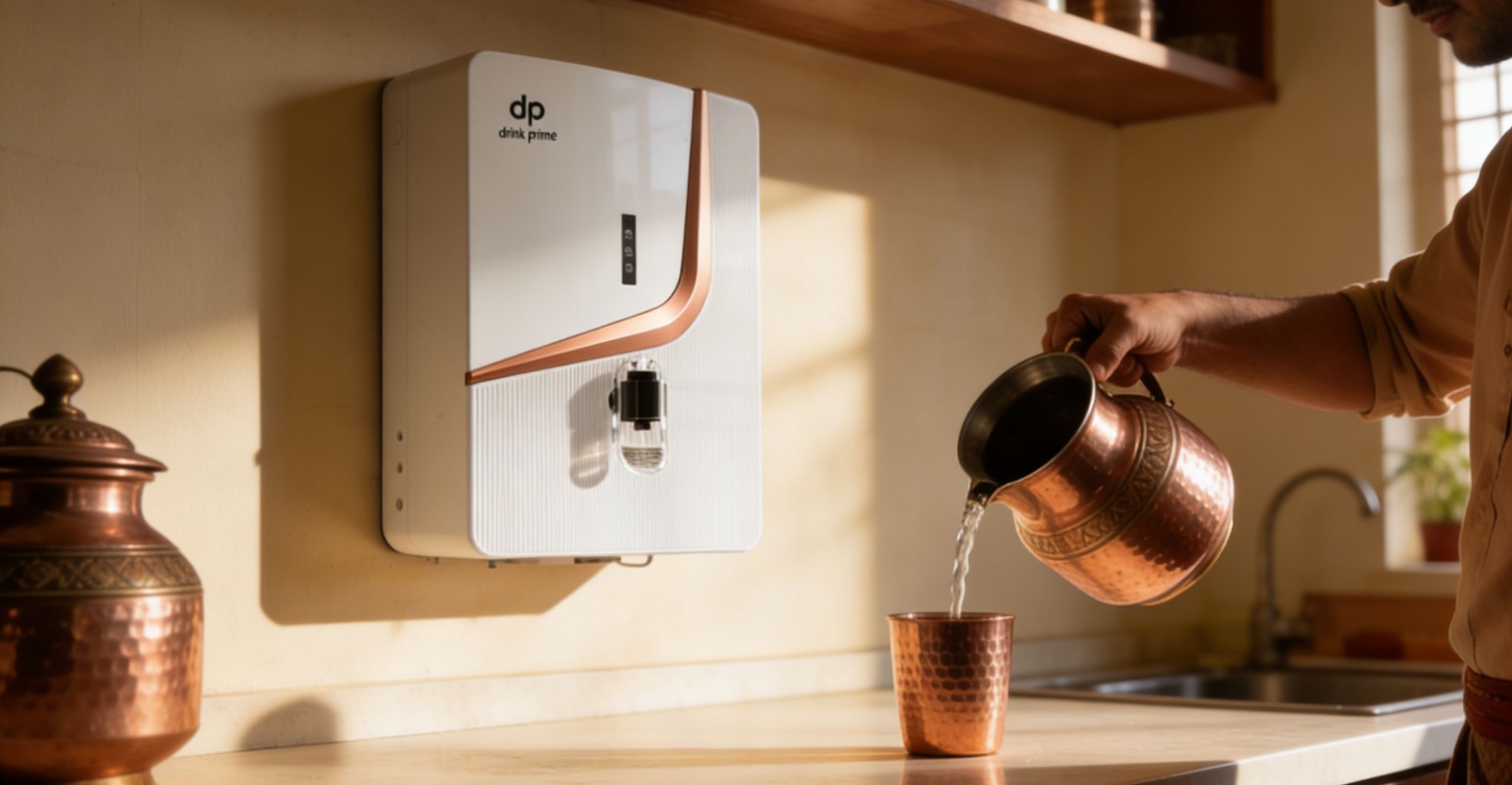
Because minerals are important for you, DrinkPrime’s purifiers add these minerals back to your treated water. After the RO stage, a mineraliser cartridge present inside the purifier restores calcium and magnesium to the water.
DrinkPrime also offers Mineral+, which optimises your overall hydration.
Get 7 Days Risk Free Trial
Conclusion
So? UV? RO? Or both? A UV LED in your purifier neutralises bacteria and viruses and an RO membrane effectively removes all the dissolved contaminants. Once you know this, the next steps are easy.
Choosing a water purifier for your home is not as hard as you might think. All you have to do is figure out where your water comes from. Then, using a TDS meter, measure the water’s TDS level. You can also visit DrinkPrime’s official website where you can check your area’s TDS.
Once you know your TDS, choose a purifier accordingly. Check DrinkPrime for purifiers on rent.
Frequently asked questions
1. What are some of the common types of contaminants in drinking water?
Depending on your water source, water is known to contain many contaminants like bacteria, viruses, dissolved solids, heavy metals, chlorine, sulphur, among others.
2. Do DrinkPrime purifiers cater to different types of water source?
Yes, DrinkPrime has different purifiers which cater to different water types. Check the website for more information.
3. What is TDS?
TDS stands for Total Dissolved Solids. Measured in ppm, it tells you the quantity of dissolved salts in your water. If your water has high TDS, it is recommended to choose a purifier with advanced multi-stage purification.
4. What is a mineraliser?
100% RO strips off minerals like calcium and magnesium from water during purification. A mineraliser cartridge restores them to make your drinking water healthy and safe.
5. What is the difference between RO and UV?
Both are membrane-based treatments. While RO removes dissolved solids, heavy metals etc., UF removes bacteria, viruses and other biological contaminants.
6. Are UF and UV one and the same?
No, UF and UV are different. UF stands for ultrafiltration and UV stands for ultraviolet. UF uses a membrane to physically separate contaminants and UV uses an LED lamp to neutralise bacteria and viruses present in the water.
7. Does DrinkPrime have UF purifiers?
No, DrinkPrime does not have UF purifiers. DrinkPrime purifiers also don’t use UF as a purification stage. Check DrinkPrime website for more information on different products.
8. How to measure TDS of your water?
You can measure TDS using a TDS meter. You can also check your area’s TDS using DrinkPrime’s website.