Most Indian households use borewell water, thinking, “Water looks crystal clear and clean,” but underground water carries far more than your eyes can see. High TDS, excess salts, fluoride, iron, and hardness all silently enter your daily routine through the same water you drink, cook with, and bathe in every single day.
And the confusing part? Borewell water doesn’t always look dirty.
In simple words, borewell water is groundwater pulled from deep underground through borewells or tube wells. Since this water travels through layers of soil, rocks, and minerals, it naturally picks up salts, metals, and dissolved impurities on the way. That’s why in many Indian homes, bore water feels hard, tastes slightly salty, leaves white stains on taps, and slowly starts damaging appliances and even water purifiers.
In this blog, we will explore what exactly borewell water is, why it creates problems for regular water purifiers, signs that your home has hard or salty water, and how choosing the right borewell water purifier can make a huge difference in your daily life.

What exactly is Borewell Water?
Borewell water is groundwater, extracted from deep underground using borewells or tube wells. Since such water comes from the layer of rock and soil, it naturally picks up dissolved minerals along the way.
When it comes to countries like India, the bore water generally comprises high TDS, excess amounts of salts, iron content, fluoride, nitrates, and heavy metals in some regions. But the biggest issue is you can’t really tell by looking at the water, because water looks crystal clear, but it is unhealthy for daily consumption.
That is the reason why a proper water purifier for borewell water isn’t optional anymore in many Indian homes.
Why Borewell Water Damages Regular Water Purifiers
Here is where most people make a mistake. They buy a basic water purifier that is designed for municipal water supply and connect it directly to a borewell line, and within months, filters start getting clogged faster, RO membranes get damaged, the flow rate slows down, and maintenance costs increase. This happens because borewell water is usually much harder and saltier than regular tap water. Additionally, a standard water purifier is not built to handle such a type of load. So, that’s a reason you need a specific water purifier or a dedicated borewell water purifier that is designed for high TDS and hard water conditions.
Signs Your Home Has Hard or Salty Bore Water
Here are the most common signs:
- White scaling on utensils and taps
- Soap is not forming a lather properly.
- Dry skin after bathing
- Hair fall or rough hair texture
- White residue inside kettles
- Frequent water purifier servicing
So, if you notice such signs, then your water filter for bore water probably needs an upgrade.
How to Remove Salt from Bore Water
RO or Reverse Osmosis helps in eliminating excess salts, heavy metals, high TDS levels, and other harmful contaminants that are commonly found in borewell water. But the problem is, not every RO water purifier is built to handle borewell water. But the problem is, not every RO water purifier is built to handle borewell water effectively. Since bore water usually has high hardness and salt levels, you need a water purifier that is specifically designed for high TDS levels and consistent filtration performance. In many homes, people also make use of additional systems like sediment filters, activated carbon filters, and UV water purification to improve water quality.
How to Choose the Right Borewell Water Purifier
Selecting the right borewell water purifier is not just about buying the most expensive machine online. The first thing you should check is your water quality, especially the TDS level and hardness. Since borewell water often comprises excess salts, minerals and impurities, a water purifier with RO technology is usually an ideal choice. Moreover, you should also look for multi-stage filtration systems that include sediment filters, activated carbon filters, and UV purification for better protection.
Additionally, another important factor is maintenance, because bore water can wear out filters more than normal tap water. A good water purifier for borewell water should be able to handle high TDS efficiently, offer consistent water flow, and offer reliable servicing support. Hence, choosing the right water purifier is based on your actual water conditions, which can help improve both water quality and the lifespan of the water purifier.
Why Choose DrinkPrime
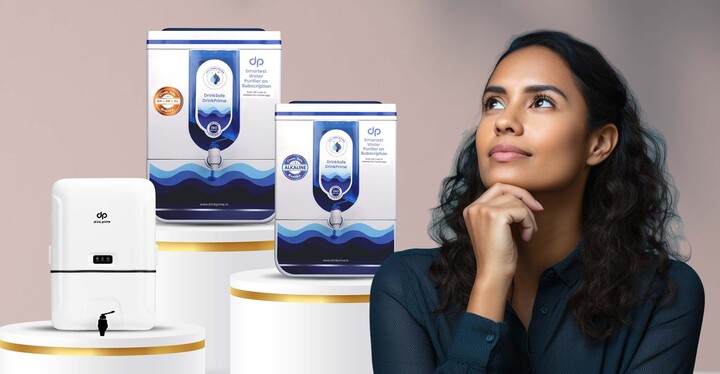
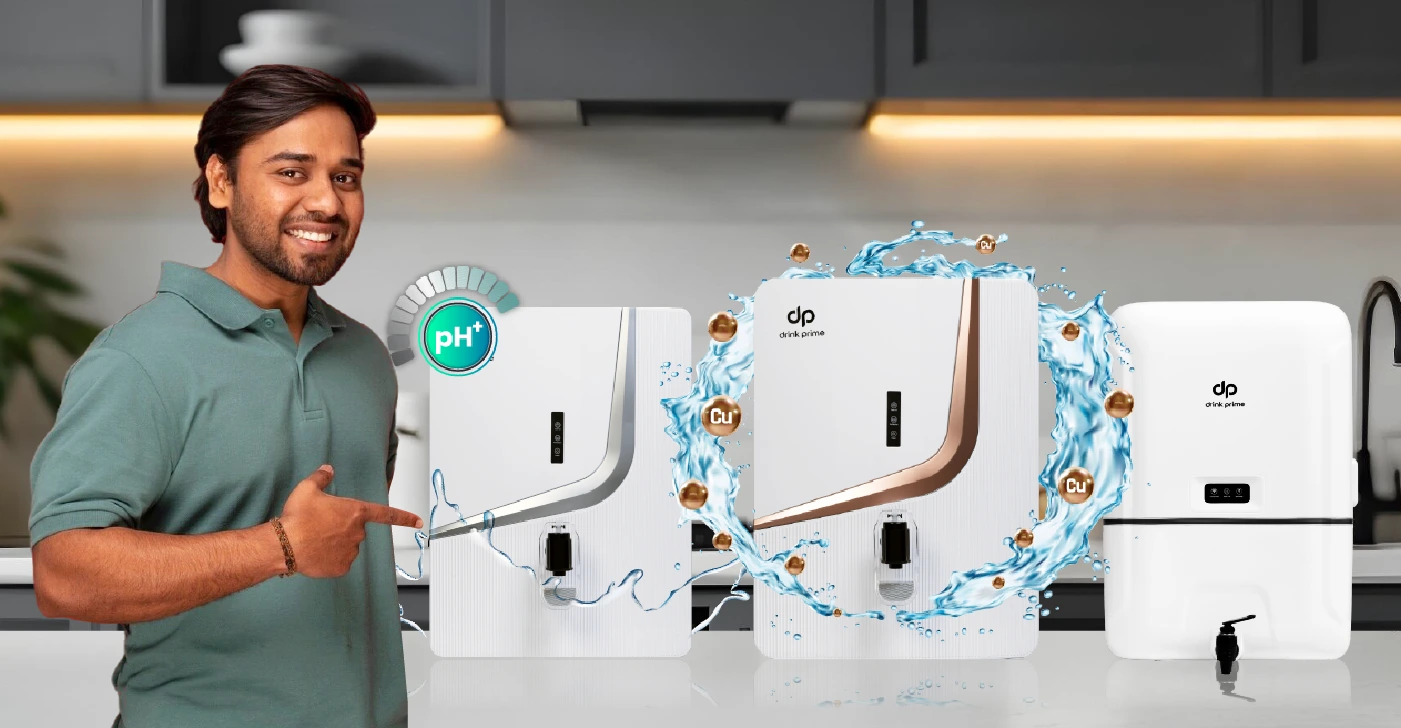
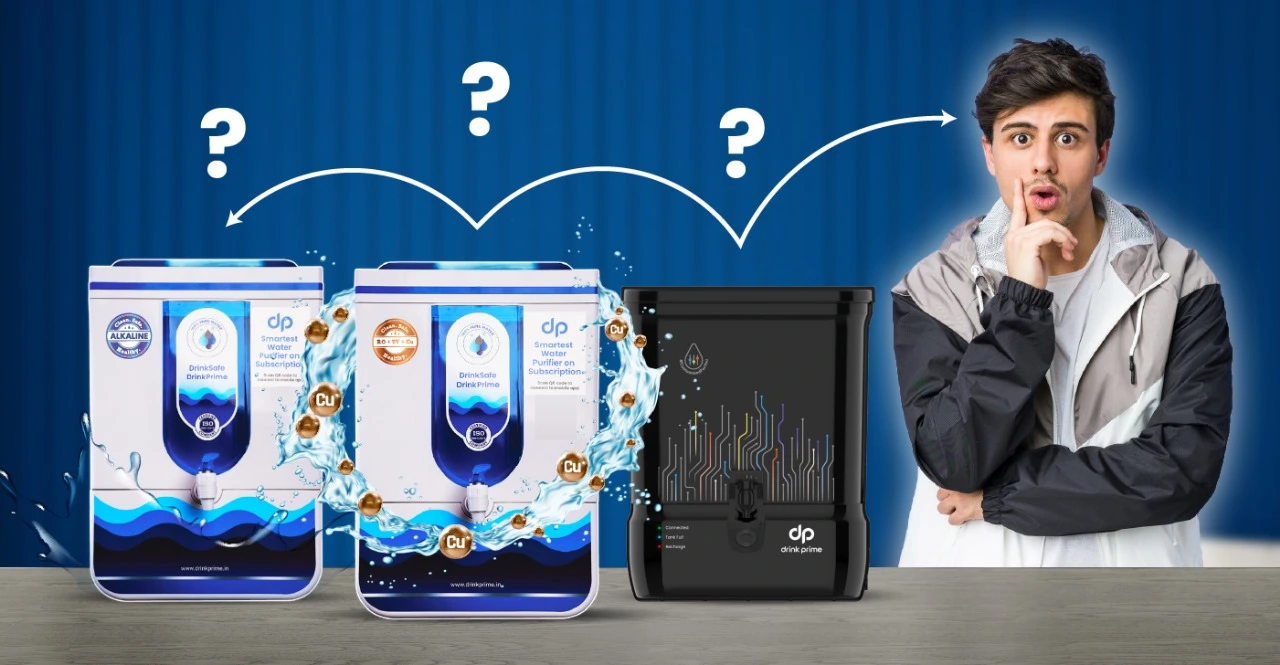
Many Indian families are switching to DrinkPrime because managing borewell water has become frustrating with the old traditional water purifier. With regular RO water purifiers, there are high TDS and hard water issues, which lead to frequent maintenance and unexpected repair costs. DrinkPrime offers a more flexible solution with subscription-based water purifiers that are designed to handle Indian water conditions, which include challenging bore water. So, instead of paying a large upfront amount, users get access to advanced water purification technology, regular servicing, and filter maintenance without any usual hassle. For people looking for a reliable water purifier for borewell water, DrinkPrime has become an ideal option because it combines smart water purification with affordable monthly plans.
Summary
In summary, borewell water may look clean, but it often comprises high TDS, excess salts, heavy metals, and other impurities that can affect both health and household appliances. Since regular water purifiers are not designed to handle hard and salty bore water, they often face issues like clogged filters, damaged RO membranes, and increased maintenance costs. That’s a reason why people are choosing a proper borewell water purifier with RO technology and multi-stage filtration, which is important for safe drinking water. Many Indian families are now shifting towards smarter solutions like DrinkPrime, which offers subscription-based water purifiers designed specifically for challenging Indian water conditions, including borewell water. With regular servicing, advanced filtration, and affordable plans, it provides a convenient and reliable way to manage bore water problems effectively.
FAQs
- Is borewell water safe for drinking?
Borewell water can be safe for drinking only after proper purification. It often contains high TDS, salts, fluoride, and other contaminants that require advanced filtration systems like RO purification.
2. Which is the best water purifier for borewell water?
A water purifier with RO technology and multi-stage filtration is usually the best option for borewell water, especially in areas with high TDS and hard water conditions.
3. How do I know if my home has hard bore water?
Common signs include white stains on taps and utensils, dry skin, rough hair, soap not lathering properly, and frequent purifier servicing issues.
4. How to remove salt from bore water effectively?
The most effective way to remove salt from bore water is by using an RO water purifier, as Reverse Osmosis technology helps reduce excess salts, high TDS, and harmful contaminants.
Get 7 Days Risk Free Trial