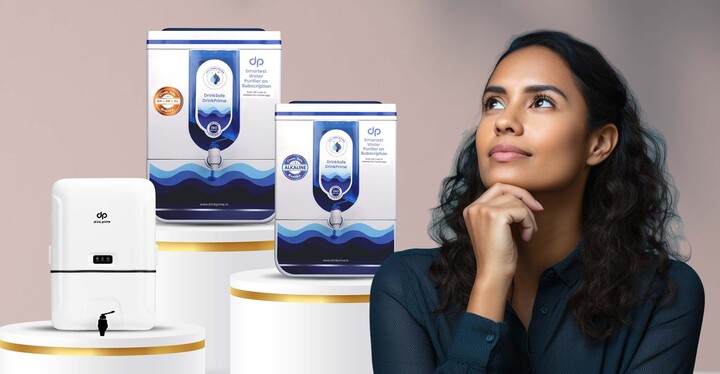
Many of us don’t wake up one fine day and suddenly decide to research water purifiers. It generally starts with something random.
Maybe the water started tasting weird, or you noticed white stains on utensils. Or maybe someone in your house casually asks you: Are you even sure this water is completely safe?
And then boom, we started searching for water purifiers on Google.
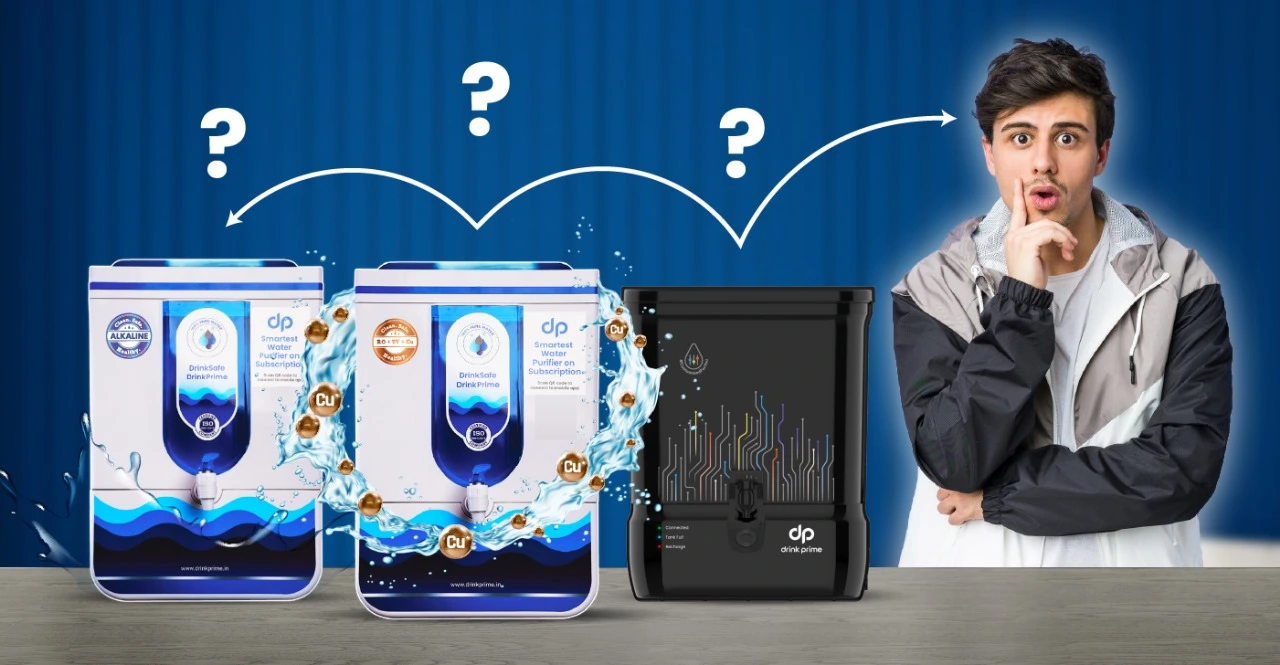
RO, UV, Copper, and Alkaline appear, and we get confused.
Because here’s the thing nobody explains properly, not every home needs the same kind of water purifiers. Some people are using RO when they don’t even need it, and some are drinking untreated borewell water with just UV, and some are spending 20,000 on machines without even understanding what they do.
So, before you buy anything, let’s simplify this properly. In this blog, we will understand what kind of water purifiers you actually need for your home.
Understand Your Water Source First
This is where most people go wrong, and even you must be as well. They compare brands first before understanding the source of water.
But your water purifier should depend on where your water comes from, how hard the water is, whether there are any dissolved impurities or not, and whether bacteria or viruses are a concern. Because different water purification technologies solve different issues. And once you understand this, choosing becomes much easier.
What is RO Purification and When is it Needed?
RO stands for Reverse Osmosis, and it is designed to eliminate dissolved salts, heavy metals, chemicals, and excess TDS levels. This usually happens with borewell water, tanker water, or hard water supply. If your water tastes salty, metallic, or leaves scaling on kettles and taps, then RO is usually the safer choice. Ro water purification is best for high TDS water, borewell supply, and areas with hard water. It is not always needed to municipal corporation water with low TDS.
What is UV Purification and When is it Needed?
Ultraviolet purification or UV lamp generally targets water with microbiological contaminants like bacteria, viruses, or microorganisms. It works by using UV lights to deactivate harmful microbes in water. But here’s the catch: UV does not remove dissolved salts, chemicals, or heavy metals. So, if your water already has high TDS levels, then a UV water purifier is not enough. UV water purifiers are best for municipal water supply, low TDS water, and areas where microbial contamination is the main issue.
Think of UV like a disinfection layer that does not provide a complete purification solution. Most of the modern purifiers combine UV with RO for this exact reason.
What is UF Purification and When is it Needed?
UF stands for Ultrafiltration, which helps in removing dirt, suspended particles, and some bacteria.
The biggest merit of UF filtration is that it works without electricity. It is best for clean water, basic filtration needs, and areas with low TDS. UF is generally used as an additional filtration layer alongside RO or UV.
What is a Copper Water Purifier?
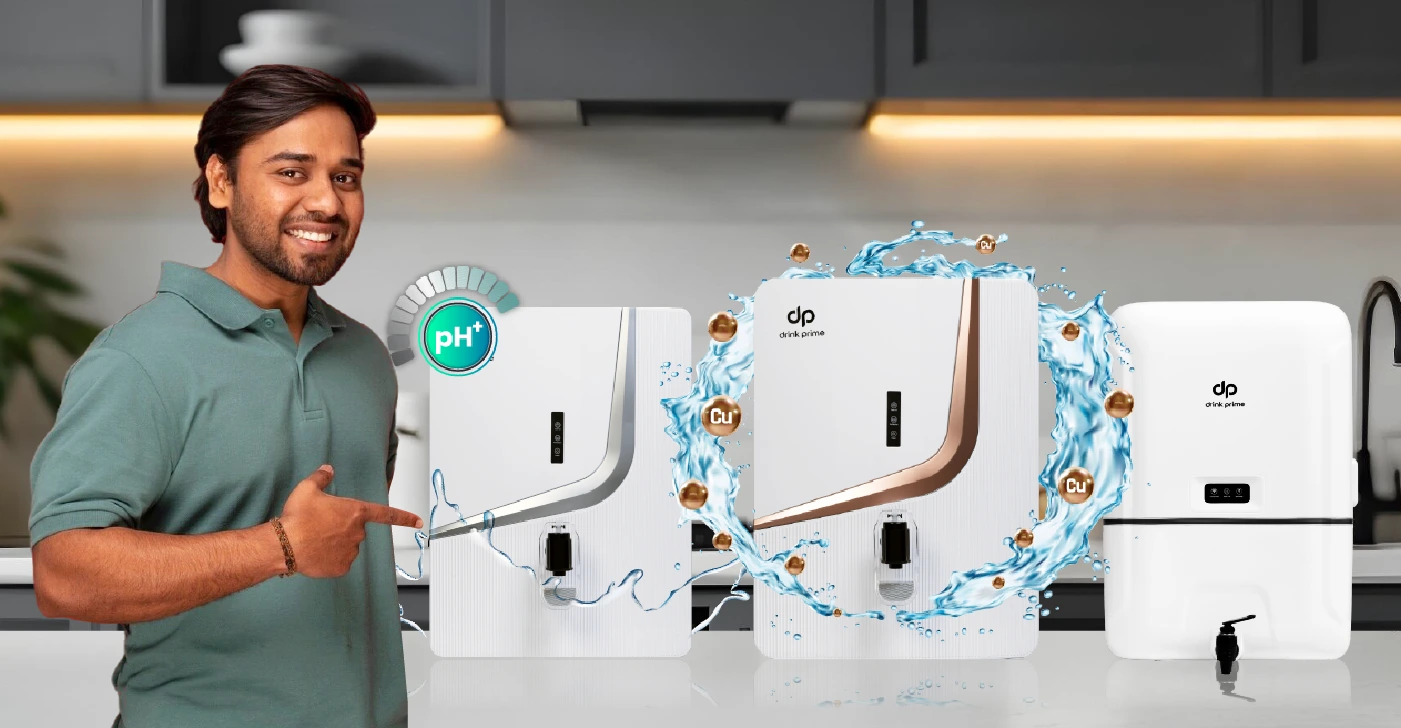
Let’s now talk about the trend that recently exploded: copper purification. Copper-infused water has been used traditionally for years, and many people believe it supports better digestion, improved immunity, and antimicrobial benefits. Modern copper purifiers usually add a controlled amount of copper ions to filtered water. But here’s the reality: Copper is not a purification technology by itself. It is an enhancement features, which mean copper does not replace RO or UV, it works alongside them. Copper is useful when you already have proper water purification, you want added wellness benefits, and you prefer the taste of copper-infused water.
What is an Alkaline Water Purifier?
Alkaline water purifiers have become extremely popular because of health and fitness trends. Such water purifiers raise water pH and often add minerals such as calcium and magnesium. Many people choose alkaline water because it is believed to taste smoother, help balance acidity, and improve the hydration experience.
But again, an important clarification, alkaline is not a water purification technology either. It is a post-treatment feature added after filtration, which means that the water purifier still needs RO and a UV lamp for actual purification.
An alkaline water purifier is useful when you dislike the flat RO water taste, you want mineral-enhancer filtered water, and you prefer smoother drinking water.
So Which One Should You Actually Choose?
Choose RO or Reverse Osmosis if you use borewell or tanker water, the water has high TDS, or the water tastes salty or hard. Choose a UV water purifier if you receive municipal water, TDS is low, and the main concern is bacteria or viruses.
Choose copper features if you want copper-enriched filtered water, and choose alkaline features if you prefer mineral-rich water taste, and enhance hydration experience.
Honestly, for most urban homes today, RO + UV + UF combinations with Copper or Alkaline enhancement work best because water quality keeps changing frequently.
Why More People Now Prefer Water Purifiers on Rent
Now comes the second problem: nobody warns you about maintenance. Buying a water purifier is easy; maintaining it properly is the real challenge. Filter needs replacement, servicing gets delayed, and repair costs suddenly appear. And this is exactly why the idea of a water purifier on rent is growing drastically.
So, instead of paying very huge costs, people now prefer monthly subscription models where installation is included, maintenance is covered, filter replacement happens automatically, and service support is managed properly.
Why Choose DrinkPrime
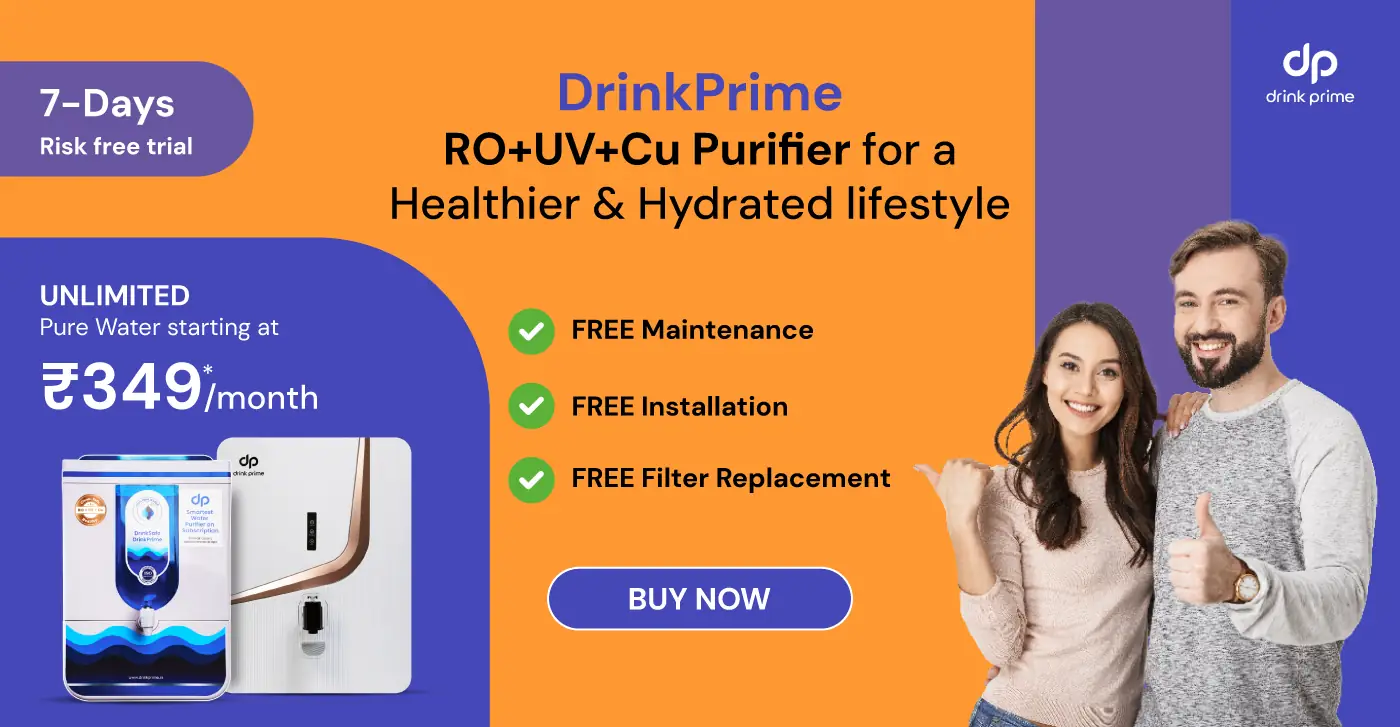
DrinkPrime offers a subscription-based model that makes access to safe, clean drinking water in a much more flexible and affordable way for modern households. So, instead of paying a huge upfront amount for a water purifier, you can simply choose a monthly plan that is based on the water quality and household needs.
DrinkPrime stands out in that they aim for both convenience and customisation; their purifiers come with multiple purification technologies like RO, UV, Copper, and Alkaline options, depending on the condition of your water supply. Additionally, with DrinkPrime, you get free installation, regular maintenance support, filter replacement, and flexible upgrade options. For people living in rented homes, shifting cities frequently, or simply looking for a hassle-free water purifier on rent, the subscription model feels much more practical compared to traditional purifier ownership.
Because at the end of the day, people don’t just want a machine anymore. They want reliable access to clean, filtered water without worrying about maintenance headaches constantly.
Get 7 Days Risk Free Trial
Conclusion
In conclusion, choosing the right water purifier is not about buying the most expensive machine or blindly following trends like copper or alkaline water, and it is about understanding your water source, your daily needs, and what kind of water purification actually makes sense for your home. Because the truth is simple, different water problems need different solutions. RO works best for high TDS and hard water, UV helps tackle bacteria and viruses, while Copper and Alkaline features simply enhance your filtered water experience rather than replace purification itself.
And today, with flexible options like a water purifier on rent, getting access to safe and clean filtered water has become much easier, affordable, and maintenance-free for modern households.
At the end of the day, the goal is not to buy the fanciest purifier. The goal is to make sure the water you and your family drink every day is safe, reliable, and something you can trust without thinking twice.