Back to the basics, aren’t we? If you’re thinking if you need a water purifier at all, then you’re at the right place. If you ask me, do you need a purifier, I’d say you do. Because everyone does.
If you’re living in a metro city in India, the chances are high that you need a water purifier. Take Bengaluru, for example. In some areas in the city, the TDS level of water is as high as 600-700 ppm. Anything above 500 ppm warrants the use of a water purifier. Anything below that as well because you never know what is in your water.
TDS is the Total Dissolved Solids present in the water. It is any impurity that is present in the water. There’s a catch, though. TDS doesn’t detect biological contaminants like bacteria or viruses. So, even if your water’s TDS is low, it can still be impure because of the presence of microbes. Also, TDS only tells you how much impurities are there in the water, not what kinds of impurities, so you may never know what’s exactly in your water, which is why using a purifier, at least a basic one at that, will make your water healthy, and pure.
This guide will cover the basics. About water purifiers, types and how DrinkPrime helps.
What is a water purifier?
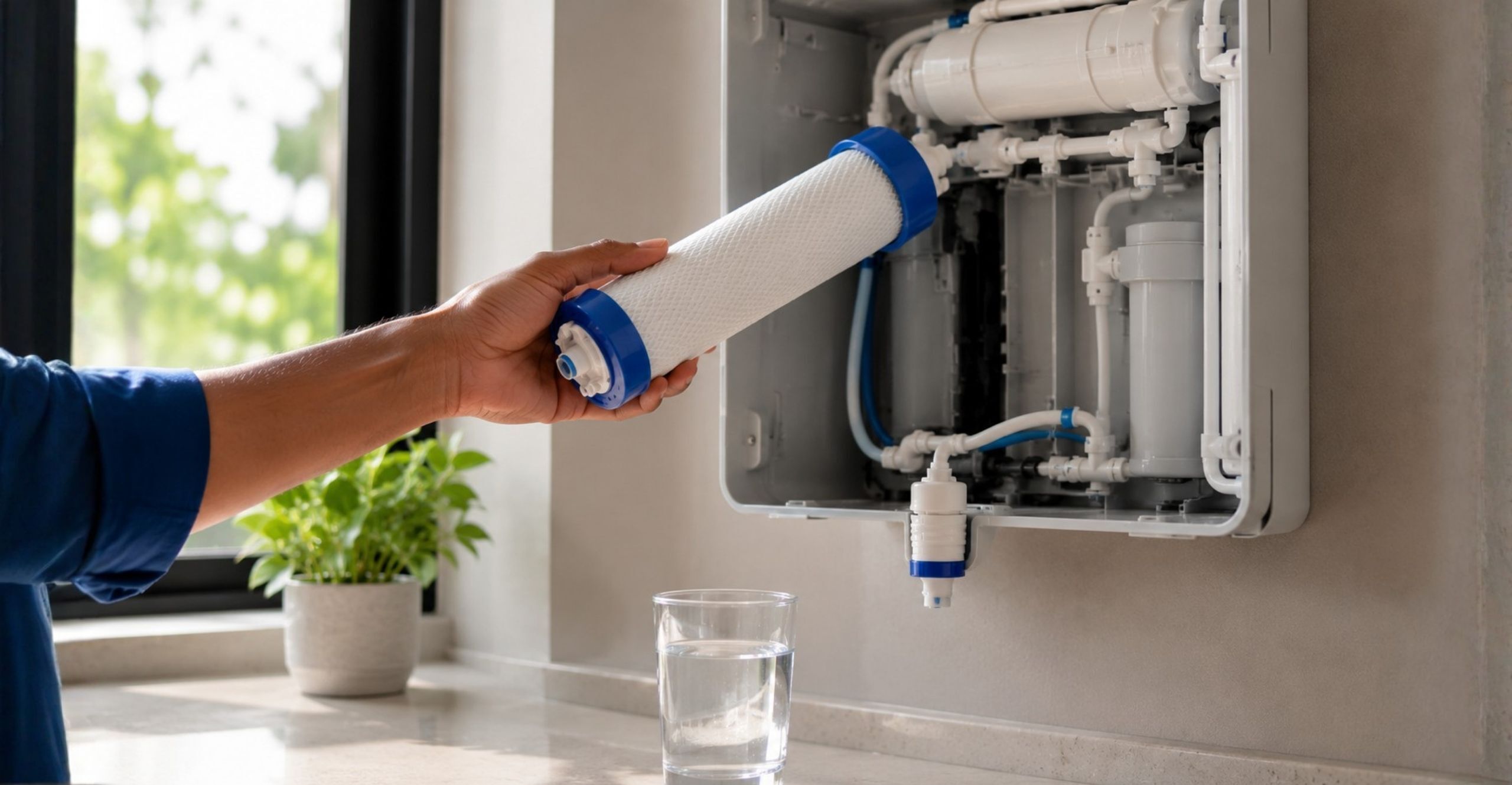
A water purifier is a device that purifies your drinking water, making it safer and healthier to drink. Most purifiers use multi-stage purification processes to remove various impurities like bacteria, viruses, parasites, dissolved solids (arsenic, lead, fluorides), excess chlorine, among others.
Because you can never know what exactly your water has, it’s suggested that you use a multi-stage purifier which uses different types of purification to remove different impurities.
A purifier which is made to remove dissolved solids may not be able to remove bacteria and viruses, which is why a one-stop solution often helps. For example, a UV (Ultraviolet) purifier neutralizes bacteria and viruses but would not be able to remove TDS. RO (Reverse Osmosis) only strips your water off TDS but would not remove the biological contaminants.
So, before you pick your purifier, it helps to know what your TDS levels are, what type of purifier you’d need.
Do different types matter?
Yes, different types of purifiers do matter.
Dissolved solids: Only RO can effectively remove the dissolved solids like arsenic, lead or any other metal present in the water. RO would not be able to remove excess chlorine or microbes and germs, for which you’d need a pre-carbon filter and a UV filter respectively.
Microbes and germs: Water travels through many places before it reaches your glass. This is why water is likely to be contaminated with germs and microbes like bacteria, viruses and parasites. A UV LED can successfully neutralise these contaminants. The lamp would not be able to remove TDS.
Taste and minerals: When removing the TDS, RO usually strips off naturally occurring minerals like calcium and magnesium as well. A mineraliser cartridge, if present in the purifier, adds back these minerals to the treated water.
This is why a purifier with all these filters would be able to effectively purify your water and enrich it with minerals.
Quick comparison: types of water purifiers at a glance
This table would quickly introduce you to the different types of purifiers and what they do.
| Type | What it removes or neutralises | Reduces TDS? | Best suited for |
| RO (Reverse Osmosis) | Dissolved solids, salts and many dissolved impurities | Yes | High-TDS water (above 500 ppm), such as borewell water |
| UV (Ultraviolet) | Bacteria and viruses (neutralised) | No | Low-TDS water (0-200 ppm) that may carry germs |
| UF (Ultrafiltration) | Microbes, sediment and suspended particles | No | Low-TDS water that needs basic filtration |
| Gravity-based | Visible dirt and sediment, plus some chemicals through its activated carbon stage | No | Water that is already fairly clean |
| Multi-stage (RO + UV + mineraliser) | Dissolved solids, bacteria and viruses, with essential minerals added back | Yes | Most city water, where the source can vary |
A quick way to read this table: First, check your TDS. If it’s high, look at RO. If it’s low but you’re worried about germs, look at UV or UF. If you’re not sure what your water contains, a multi-stage purifier covers it for you.
RO, UV, UF purifiers
Once you’ve taken a quick look at the table above, let’s now break it down.
RO (Reverse Osmosis): RO stands for Reverse Osmosis. Did you vaguely remember reading about osmosis in your school? This is a little similar to that. This is one of the widely used methods to purify water.
How does it work? RO has a semi permeable membrane which uses high pressure to separate dissolved solids and water. Water passes through the membrane and the dissolved solids get left behind.
What does it remove? Dissolved salts and solids, thus bringing down your TDS. Most RO purifiers also come with extra stages, like sediment and carbon filters, which remove dirt, chlorine and odour.
What to watch out for? RO doesn’t remove microbes like bacteria and viruses. RO also strips out good minerals like calcium and magnesium that are naturally occurring in the water. A mineraliser cartridge, if present in the purifier, adds them back. Some purifiers let part of your tap water skip RO purification to adjust TDS. This may leave some impurities behind. DrinkPrime, which has a range of water purifiers that are made for your city’s water, does not do that. More about DrinkPrime later in the blog.
Who is it best suited for? Anyone whose tap or borewell water has a TDS above 500 ppm.
UV (Ultraviolet): UV stands for Ultraviolet. This purification process uses a UV lamp to neutralize microbes, germs like bacteria, viruses and parasites.
How does it work? The water passes through a chamber with a UV lamp and it uses UV light to neutralize contaminants.
What does it remove? Disease-causing microorganisms. It doesn’t take anything out of the water. It neutralises the germs in it.
What to watch out for? UV doesn’t remove the TDS present in the water. This is why UV is mostly used for water that has a low TDS.
Who is it best suited for? Homes with low-TDS water that may carry germs. DrinkPrime’s UV variant uses a UV (ultraviolet) LED to neutralise the bacteria, and it doesn’t have the RO purification stage.
UF (Ultrafiltration): UF is the simplest of the three. Think of it as a very fine sieve for your water.
How does it work? Water passes through a membrane with tiny pores. The pores are small enough to block microbes and suspended particles, but large enough to let water through.
What does it remove? Microbes, sediment and other suspended particles.
What to watch out for? Like UV, UF doesn’t remove dissolved solids. It also can’t remove dissolved chemicals, so your TDS reading won’t change much.
Who is it best suited for? Homes with low-TDS water that needs basic filtration. Many UF purifiers don’t need electricity, though this depends on the model.
Other types: Gravity-based
Gravity-based purifiers are an old school option which many Indian households still use.
How does it work? You pour water into the top container. Gravity pulls it down through a set of filters (usually a sediment filter and activated carbon) into the storage container below. There’s no electricity and no pressure involved. Water slowly trickles down.
What does it remove? Visible dirt, sediment, and some chemicals and odour through the activated carbon stage.
What to watch out for? It cannot remove TDS and salts. It cannot also deal with hard or salty water. The filtering process is very slow since no electricity is involved. The filter also needs regular cleaning and replacement at frequent intervals to keep it running.
Who is it best suited for? Homes with low-TDS water that’s already fairly clean, or places where electricity is unreliable
Multi-stage purifiers
Most of the purifiers today are equipped with multi-stage purification systems because of their ability to fix more than one problem. They usually have a sediment filter, followed by pre-carbon, RO, UV, post-carbon and a mineraliser. Water passes through one stage after another, and finally when it reaches your glass, it is clean, safe and healthy to drink.
These purifiers remove excess chlorine and odour, TDS, neutralizes bacteria and viruses, polishes your water, and adds back the essential minerals to the treated water.
This suits most city homes, where TDS is above 200 ppm. The water that reaches your home would have travelled widely before it did. In order to make sure all kinds of impurities are removed, a multi-stage purifier is suggested for most city homes, especially metropolitan cities.
DrinkPrime purifiers are equipped with all these stages to make sure you consume safe and healthy water in every sip. We will look at different types of purifiers in the following sections.
Purifier types by added benefit
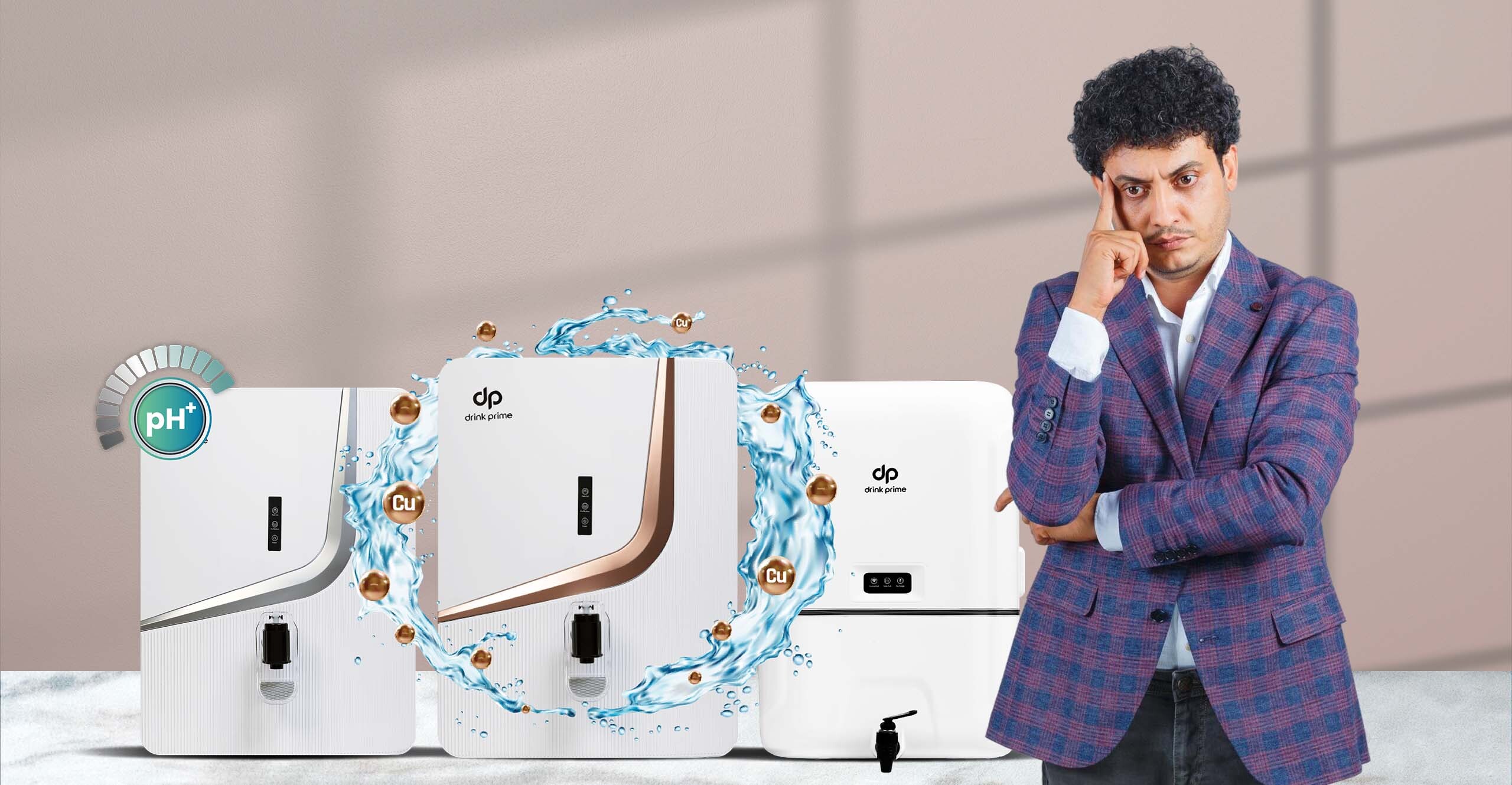
DrinkPrime has different types of purifiers based on the added benefit they offer. They are DrinkPrime Copper, DrinkPrime Alkaline, DrinkPrime Mineral+, DrinkPrime UV and DrinkPrime Under-The-Sink.
DrinkPrime Copper: This purifier is one of DrinkPrime’s signature purifiers. This purifier infuses the water with copper. Copper has been traditionally used in many Indian households, and this purifier does just that: adds controlled doses of copper to the treated water. This is along with adding calcium and magnesium back to the water. Apart from this, the purifier also has a multi-stage purification process which includes RO, UV etc.
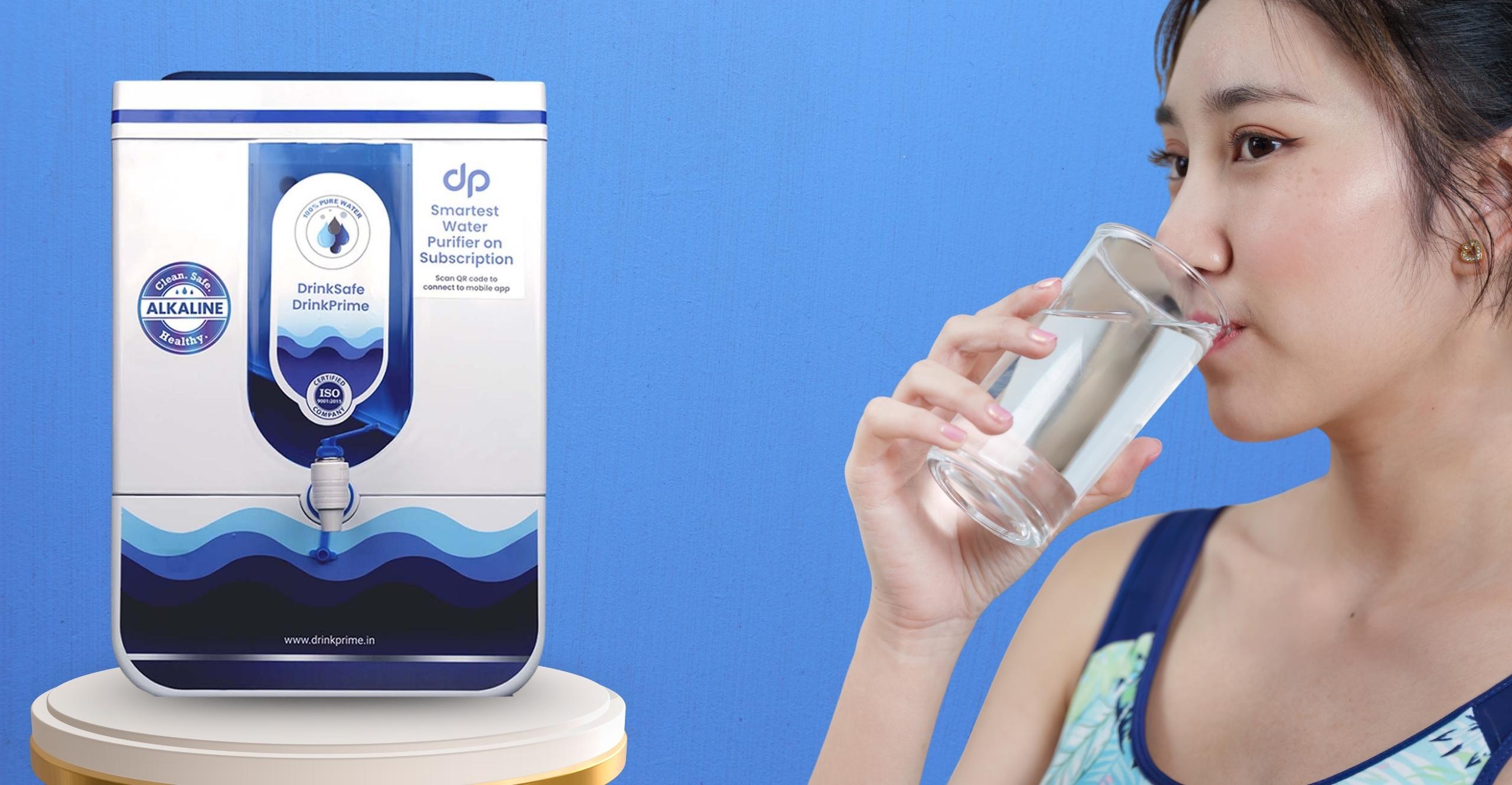
DrinkPrime Alkaline: The alkaline purifier balances the water’s pH so that it doesn’t taste too acidic or harsh. Apart from following the basic purification procedures, this purifier has an alkaline cartridge which balances the water’s pH.
DrinkPrime Mineral+: Since RO removes the ‘good’ minerals along with the dissolved solids, a mineraiser cartridge adds them back to the treated water.
DrinkPrime UV: This is a custom water purifier which is best suited for Indian households below the TDS of 200 ppm. This purifier does not have RO and only has UV. Since it treats low-TDS water, it neutralizes bacteria and viruses.
DrinkPrime Under-The-Sink: This flagship water purifier is best suited for homes which have a compact kitchen or zero counter space. Without mounting the purifier to the wall, or keeping it on the countertop, you can install the purifier under the sink, inside a cabinet. Only a small tap is visible to the eye.
Which Water Purifier Is Right for You?
The best purifier for you depends on your source water and your TDS. Once you know what your TDS is, you can refer to the table below, and get the right purifier.
| TDS reading | What does it mean? |
| 0-200 ppm | Your water is completely safe to drink. |
| 201-500 ppm | Your water is still acceptable as per BIS norms, but the taste might be affected. |
| Above 500 ppm | Your water may taste salty and/or bitter, and needs purification. |
This alone doesn’t solve the problem. Even if you know the TDS, your source water may vary every season. Getting a multi-stage purifier always helps to deal with more than one type of contaminant.
Get 7 Days Risk Free Trial
Conclusion
So, do you know what a water purifier does, and how it solves your problem with different types of impurities. The basic thumb rule is, know where you get your water from, and then check the TDS. RO is recommended for water with higher TDS. Since RO strips your water off calcium and magnesium, a purifier with a mineraliser cartridge helps since it adds them back. Check DrinkPrime for water purifiers on rent. DrinkPrime’s monthly subscription plans start from ₹349/month, with no hefty upfront cost.
Frequently Asked Questions
1. What is a water purifier?
A water purifier is a device that makes your drinking water safer by removing or neutralising impurities like bacteria, viruses, dissolved solids and excess chlorine. Most purifiers today use multiple stages to take care of different impurities.
2. Which type of water purifier is best for home use?
It depends on your water source and TDS. RO is recommended for water above 500 ppm, and UV suits water below 200 ppm. Since the source can change with the season, a multi-stage purifier is a safer pick for most city homes.
3. What is the difference between RO, UV and UF purifiers?
RO removes dissolved solids and brings down TDS. UV neutralises bacteria and viruses. UF filters out microbes and suspended particles. UV and UF don’t reduce TDS, and RO alone doesn’t deal with microbes.
4. Can I use a UV purifier for borewell water?
Only if the TDS is low, ideally 0-200 ppm. Borewell water is often high in dissolved solids, and UV doesn’t remove them. For high-TDS water, an RO-based purifier is the better choice.
5. Do I need a mineraliser with an RO purifier?
It helps. RO strips out calcium and magnesium along with the dissolved solids. A mineraliser cartridge adds them back, so the water doesn’t taste flat.
6. Is TDS the only thing I should check before buying a purifier?
No. TDS tells you how much is dissolved, not what is dissolved, and it can’t detect bacteria or viruses. Use it as a starting point, and keep your water source in mind. If you suspect something specific, a lab test gives the full picture.
7. Is a gravity-based purifier enough for drinking water?
It can work for fairly clean, low-TDS water, or where electricity is unreliable. It doesn’t reduce TDS and can’t handle salty or hard water, so it isn’t suited to every home.
8. Which DrinkPrime purifier is right for me?
It depends on your TDS and what you want from your water. DrinkPrime UV is made for water below 200 ppm. Copper, Alkaline and Mineral+ add a benefit on top of multi-stage purification. Under-The-Sink suits compact kitchens with little counter space.