Buying a water purifier for your house involves more than just choosing a good brand name or an expensive purifier with advanced technology. Whether it is RO, UV, UF, or a multi-stage purifier system, selection depends on the quality and source of the water coming into your home. You should also consider your budget, family size, and required maintenance.
Read on to learn some important tips that can help you decide how to select a water purifier for your home.
1. Evaluate Source of Water
Your first priority before buying any type of water purifier, including RO or UV purifier systems, should be to identify how and from where the water supply in your house originates. Common sources include municipal tap water, bore well water, tanker water, or a combination of two or more sources.
While municipal water sources may have relatively low TDS levels, they can still be contaminated with microbes. Conversely, water coming from bore wells or tankers might have high dissolved salts, hard water, or high iron content.
Depending on the source, you may need different kinds of water treatment.
2. Assess Water Quality and TDS
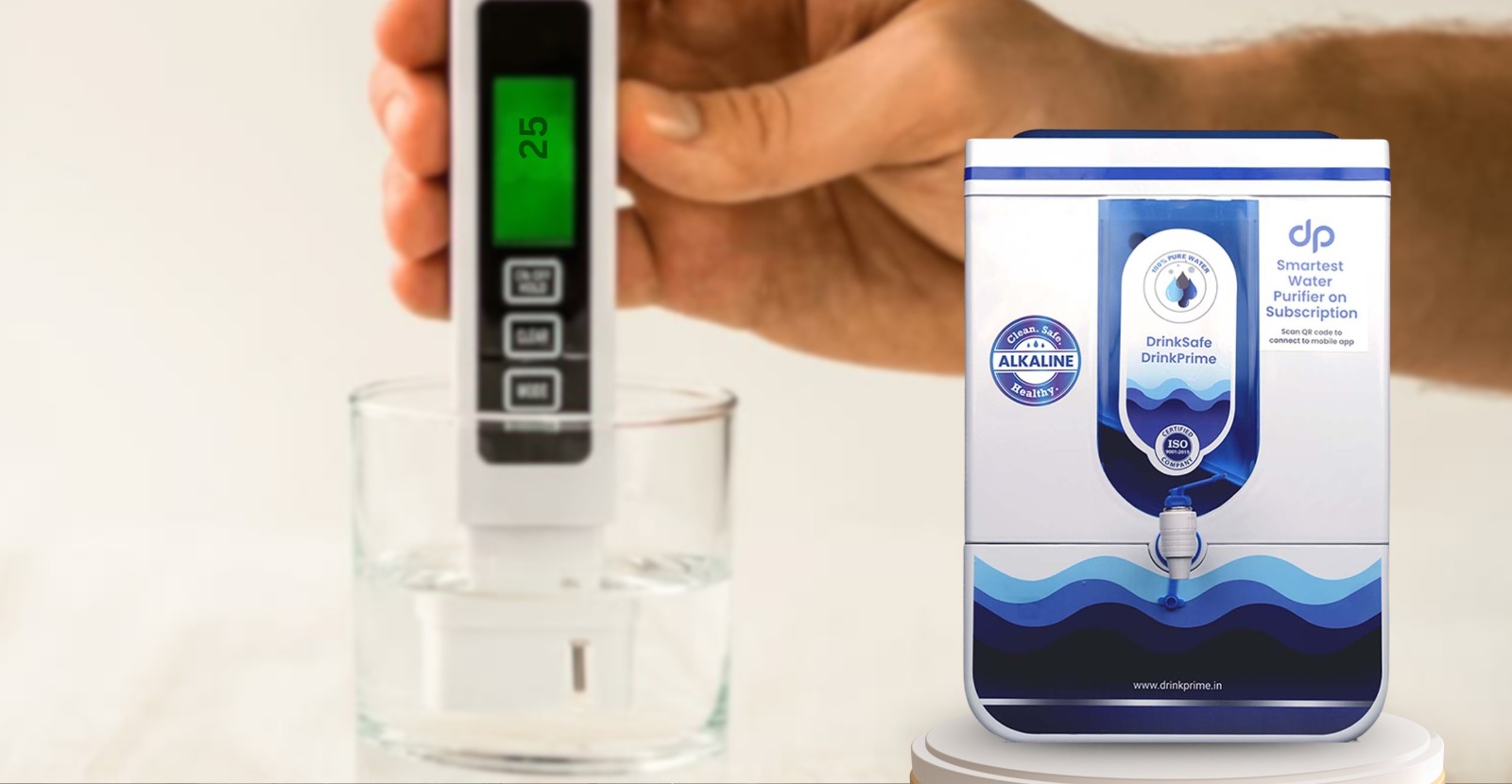
Total Dissolved Solids (TDS) indicates the concentration of dissolved material, like minerals and salts, in water. However, it cannot reveal much about what those dissolved substances really are, whether they are organic, inorganic, microbiological, or if there’s any disease-causing agent present in the water.
Even water with very low TDS might be hazardous, while high TDS water might be free from harmful microorganisms but unsuitable for consumption due to salts and hardness.
If possible, get the water test conducted for parameters like hardness, TDS level, the presence of iron, and microbial contamination to figure out what purification mechanism you need.
3. Select the Right Water Purifying Technology
Whether you are opting for a RO, UV, or a UF water purifier for home or choosing any kind of multi-stage system, it’s important that you are familiar with their mechanisms.
Reverse Osmosis (RO) Purifiers
The RO purifiers have membranes that work to reduce the level of dissolved solids from the water, such as salts and chemical contaminants.
It is the go-to option for water with TDS that is beyond 500 ppm.
UV Water Purifiers
UV purifiers use Ultraviolet light to disinfect water, killing microbes. They do not remove dissolved solids and salts and work best for low TDS waters to inhibit microorganism growth.
UF Purifiers
Ultrafiltration purifies water through a process that passes it through a fine membrane that removes debris and microorganisms, not dissolved solids. This is ideal for waters that aren’t overly contaminated but need the removal of particles and a level of microbial sterilization.
Multi-Stage Water Purifiers
This purifier essentially utilizes the combined power of many – from UV to activated carbon to RO or UF – to cater to different problems in the water, making it ideal if the water has combined impurities.
But before picking the purifier that has most stages, remember to confirm its relevance with respect to the actual issue of water quality in your home.
4. Be Aware of the Contaminants
The treatment needed to remove a type of contaminant from water varies. Some dissolved particles require the RO membrane, whereas for killing microorganisms, either the UV system is needed or a process with disinfection method.
Chlorine, for instance, results in an unpleasant taste and odour in water – the water can be purified by activated carbon filtration methods. Similarly, if any water has high levels of iron or hard salts, specific filters might be required.
Therefore, before choosing the purification system, know about the contaminants you need the purifier to tackle.
5. Consider the Storage Capacity
Storage capacity of the water purifier is another practical matter to be discussed.
You will need a bigger size for a large family, especially if you require a number of litres of purified water throughout the day or in case water supply interruptions are normal in your area, while small-size purifiers would suffice for single or couple usage.
6. Check Purification Capacity and Recovery
Water from RO purifiers is often wasted; check out just how much water the purifier can supply. A good RO purifier will have an increased rate of purification capacity and good water recovery compared to others so as to let you not worry much about the wastewater component.
7. Take into Account the Maintenance and Care
Maintaining water purification is very important.
If you are using RO purification, the filter has to be replaced every year and the membrane in two or three years – this is how the performance can be sustained.
If it gets too costly or you will face trouble getting these replaceable parts and after-care service regularly, do not go for the device. Do check the warranty.
Also, make it a point to select a purifier that provides ease of service and readily available maintenance kits or replacement filters.
8. Know Your Budget and Cost of Ownership
The cost of a purifier does not end with the buying price; it is also an ongoing investment that you make for each year as you pay for its maintenance and also cover the expenditure of power needed to operate the purifier, filter change frequency, and electricity consumed while operating it.
It is worthwhile, thus, to investigate whether there’s also the choice of purchasing water purifiers through payment plans which cover upkeep, replacement, and servicing altogether.
9. Select According to the Local Water Quality of Your Area
Water quality often varies in a dramatic manner across regions, and you do not know if a purification system that is bestselling in other regions would perform just as well in your city.
For instance, it would be foolish for you to look for a best-of-all purifier in this list when the city tap water is clean in the first place or if the bore well you rely on requires extensive treatment.
That’s why before you purchase an air purifier, it is far better to try and ascertain the water quality in your region.
10. Check for After-Sales and Support
One part of owning and maintaining a water purifier you cannot ignore – and that is the level of after-sales service or support that the manufacturer offers.
Many of the high-end purifiers, if they come with costly replacement filters or filters which are tough to find or need to be maintained by highly expert personnel, will surely turn a delight into a headache over time.
Before you opt for the purifier system, inquire about availability of 24/7 support, number of technicians, after-sales services including filter replacements in your locale.
Final Thought
To buy the best water purifier for home is an essential yet often challenging decision.
By analyzing your water quality and household needs – from water sources, to TDS, the presence of contaminants to your financial constraints – you can effectively choose between various technologies like RO, UV, or multi-stage purifiers.
Furthermore, factor in long-term costs like maintenance and filter replacement, as well as the manufacturer’s after-sales support, to make a sound investment in your family’s health.
Explore plans from DrinkPrime that offer city-specific water quality analysis and comprehensive water purifier subscriptions that bundle installation, maintenance, and filter replacement.
Frequently Asked Questions
1. How do I select a water purifier for home?
Identify your water source, its TDS, hardness, and contaminants.
Choose a purification technology (RO, UV, UF, or multi-stage) based on these factors, along with your family size, storage needs, maintenance preferences, and budget.
2. How do I select the best water purifier for my home?
The “best” water purifier is subjective and depends on your specific water conditions. A purifier effectively suited for your water’s TDS, impurities, and microbial content, with suitable maintenance and cost of ownership, is the right choice.
3. Which water purifier is best for high-TDS water?
RO water purifiers are generally recommended for water with a high TDS, usually above 500 ppm, as they effectively remove dissolved salts and contaminants.
However, water testing is always advised.
4. Is RO required for low-TDS water?
No, RO might not be necessary for low-TDS water.
UV or UF purifiers are often more suitable if the primary concern is microbial contamination and not dissolved solids.
Get 7 Days Risk Free Trial